DASH Diet for Busy People: Quick, Low-Sodium Meals in 15 Minutes or Less

著者: Ben Wilson公開日: 2026/4/10この記事はオリジナルです

You don't have time to cook elaborate DASH diet meals — I get it. I used to survive on high-sodium takeout between back-to-back meetings. As a former office worker who reversed early hypertension, I've designed three 15-minute DASH-aligned meals that taste great and take almost no time. PlanForBP helped me nail the right shortcuts.

The keyboard is still warm from my last email. It's 1:15 PM, and I have exactly 45 minutes before my next meeting. In my old life, that 45 minutes meant a sad desk lunch of whatever was closest — a sandwich from the vending machine, a protein bar with enough sodium to make my doctor wince, or, if I was feeling ambitious, a sad salad from the corporate cafeteria.

That was before I figured out that you can eat genuinely well on a DASH-aligned diet even when your schedule is a disaster. Not by meal prepping elaborate containers on Sunday — I tried that, it didn't last — but by building a system of quick, high-quality meals that take 15 minutes or less.

The Convenience Food Trap

Here's the thing about busy professionals and food: we optimize for speed, and the food industry knows it. Every convenience food — every frozen meal, every packaged sandwich, every drive-through item — is engineered to be fast and cheap. And almost all of them are drowning in sodium.

A single frozen lasagna from the grocery store can contain 800 to 1,200 mg of sodium. A fast-food chicken sandwich? Often 1,500 mg or more. A prepackaged "healthy" salad from a convenience store with its dressing packets and processed toppings? Still 600 to 900 mg, easily.

The DASH diet recommends keeping daily sodium under 2,300 mg — and ideally under 1,500 mg if you have hypertension. One convenience meal can use up half your daily allowance before you've even finished eating.

That's why the 15-minute rule matters. If you can make a real meal in the same time it takes to microwave a frozen dinner, there's no reason to eat the frozen dinner anymore.

Three Meals That Changed How I Eat at Work

Meal 1: Greek Yogurt Power Bowl (5 Minutes)

I know what you're thinking. Greek yogurt isn't a meal. But with the right toppings, it absolutely is.

**What goes in it:** - One cup of plain, nonfat Greek yogurt (about 60 mg sodium — barely anything) - Half a cup of fresh blueberries - One tablespoon of ground flaxseed - Half a banana, sliced - One tablespoon of raw walnuts - A drizzle of honey

**Why it works:** The Greek yogurt gives you about 15 to 20 grams of protein, which keeps you full. The berries add antioxidants and natural sweetness without sugar spikes. The flaxseed and walnuts provide omega-3s and healthy fats. This bowl has about 120 mg of sodium total — compared to a typical breakfast sandwich, which is closer to 800 mg.

I eat this at my desk while checking emails. It takes five minutes to put together, and I feel genuinely satisfied, not sluggish, for the next three hours.
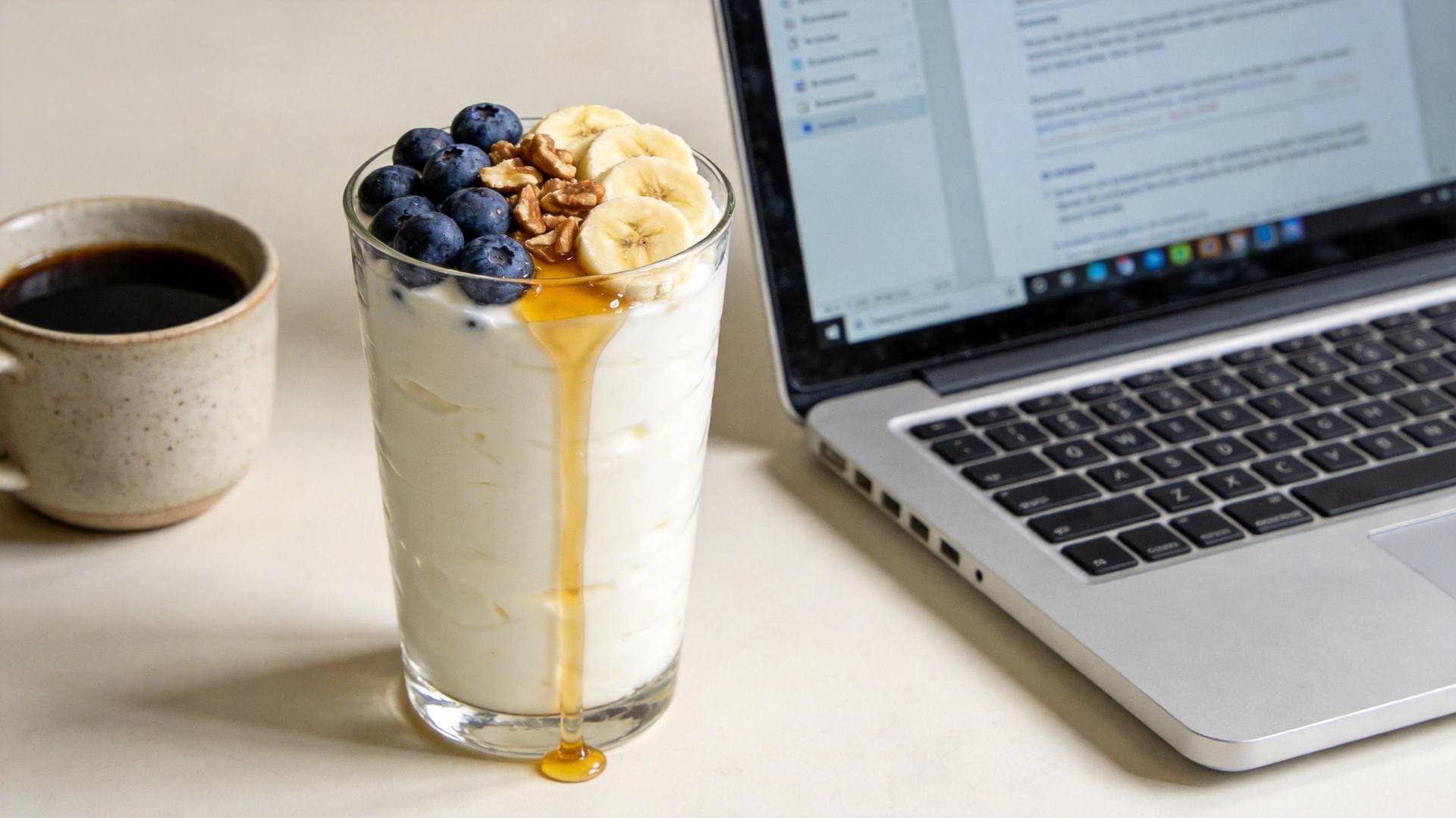

image_1

Meal 2: Open-Face Turkey and Avocado Sandwich (10 Minutes)

This is the lunch I eat when I'm working from home and have a few more minutes. It's more substantial than the yogurt bowl and genuinely delicious.

**What goes in it:** - Two slices of whole grain bread (look for 100 mg sodium or less per slice) - Four ounces of sliced roasted turkey breast (look for "no sodium added" on the label) - Half an avocado, sliced - Two slices of tomato - Half a lemon, juiced - Black pepper - A handful of baby spinach

**How you make it:** Toast the bread. Layer the turkey on the toast. Mash the avocado slightly with the lemon juice and spread it over the turkey. Add tomato slices and baby spinach on top. Season with black pepper.

Total sodium: around 350 mg. A typical deli sandwich with processed cheese and condiments? 1,200 to 1,800 mg, easily. This tastes fresher, too — the lemon in the avocado adds brightness that salt would just muddy up.
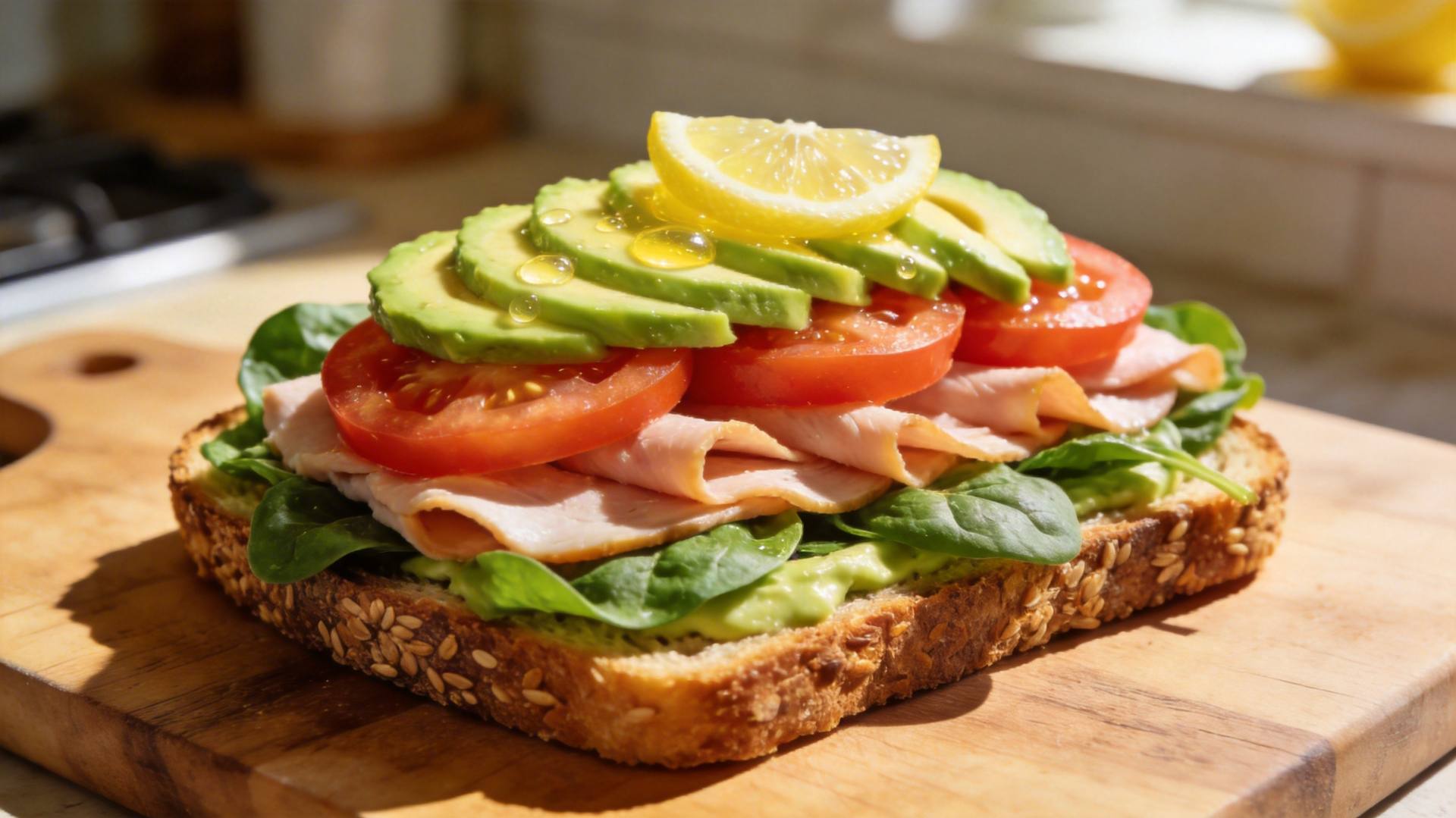

image_2


Meal 3: Canned Tuna and Hummus Wrap (10 Minutes)

This one is my go-to for days when I have a working lunch or need something I can eat quickly without sitting down.

**What goes in it:** - One can of low-sodium chunk light tuna in water, drained (about 150 mg sodium if you buy the right brand) - Two tablespoons of hummus - One whole wheat tortilla wrap - Half a cup of arugula - Sliced cucumber - One tablespoon of everything bagel seasoning (the seeds add crunch without sodium)

**How you make it:** Mix the drained tuna with the hummus. Spread it on the tortilla. Add the arugula, cucumber slices, and everything bagel seasoning. Roll it up and wrap it in foil.

This wraps up in about 10 minutes, travels well, and has about 380 mg of sodium total. Compare that to a fast-food chicken wrap, which is often 1,100 mg or more.

How PlanForBP Helped Me Build This System

When I first started trying to eat DASH-aligned food at work, I was making a lot of mistakes. Buying "low-fat" products that were loaded with sodium to compensate for lost flavor. Reaching for "heart-healthy" frozen meals that were anything but low in sodium. Basically swapping one problem for another.

PlanForBP's nutrition module helped me understand the specific things to look for on nutrition labels — not just the sodium number, but the serving size context, the potassium-to-sodium balance, and the types of sodium (sodium nitrate versus naturally occurring sodium, for example). That knowledge is what turned a chaotic approach to food into an actual system that I could follow without thinking about it.

The prioritization guidance was also key. When you're eating on a time budget, you can't optimize every single meal. PlanForBP helped me understand which DASH goals to focus on first — starting with sodium reduction, then adding potassium-rich foods, then fiber — so I wasn't overwhelmed by trying to be perfect all at once.

One Last Tip Before You Go

If you buy nothing else from this article, do this: read the sodium number on the nutrition label before you buy any packaged food. Not after you've already put it in your cart. Before. That one habit — consciously checking sodium before buying — will change your grocery cart faster than any recipe or meal plan.

You're busy. I know that. I've lived it. But you also deserve to eat food that supports your health instead of undermining it. These three meals are a starting point. Build from there. And if PlanForBP can help you figure out what comes next, use it. That's what it's there for.
前の記事The keyboard is still warm from my last email. It's 1:15 PM, and I have exactly 45 minutes before my next meeting. In my old life, that 45 minutes meant a sad desk lunch of whatever was closest — a sandwich from the vending machine, a protein bar with enough sodium to make my doctor wince, or, if I was feeling ambitious, a sad salad from the corporate cafeteria. That was before I figured out that you can eat genuinely well on a DASH-aligned diet even when your schedule is a disaster. Not by meal prepping elaborate containers on Sunday — I tried that, it didn't last — but by building a system of quick, high-quality meals that take 15 minutes or less. The Convenience Food Trap Here's the thing about busy professionals and food: we optimize for speed, and the food industry knows it. Every convenience food — every frozen meal, every packaged sandwich, every drive-through item — is engineered to be fast and cheap. And almost all of them are drowning in sodium. A single frozen lasagna from the grocery store can contain 800 to 1,200 mg of sodium. A fast-food chicken sandwich? Often 1,500 mg or more. A prepackaged "healthy" salad from a convenience store with its dressing packets and processed toppings? Still 600 to 900 mg, easily. The DASH diet recommends keeping daily sodium under 2,300 mg — and ideally under 1,500 mg if you have hypertension. One convenience meal can use up half your daily allowance before you've even finished eating. That's why the 15-minute rule matters. If you can make a real meal in the same time it takes to microwave a frozen dinner, there's no reason to eat the frozen dinner anymore. Three Meals That Changed How I Eat at Work Meal 1: Greek Yogurt Power Bowl (5 Minutes) I know what you're thinking. Greek yogurt isn't a meal. But with the right toppings, it absolutely is. **What goes in it:** - One cup of plain, nonfat Greek yogurt (about 60 mg sodium — barely anything) - Half a cup of fresh blueberries - One tablespoon of ground flaxseed - Half a banana, sliced - One tablespoon of raw walnuts - A drizzle of honey **Why it works:** The Greek yogurt gives you about 15 to 20 grams of protein, which keeps you full. The berries add antioxidants and natural sweetness without sugar spikes. The flaxseed and walnuts provide omega-3s and healthy fats. This bowl has about 120 mg of sodium total — compared to a typical breakfast sandwich, which is closer to 800 mg. I eat this at my desk while checking emails. It takes five minutes to put together, and I feel genuinely satisfied, not sluggish, for the next three hours. 图片路径: image_1.jpg Meal 2: Open-Face Turkey and Avocado Sandwich (10 Minutes) This is the lunch I eat when I'm working from home and have a few more minutes. It's more substantial than the yogurt bowl and genuinely delicious. **What goes in it:** - Two slices of whole grain bread (look for 100 mg sodium or less per slice) - Four ounces of sliced roasted turkey breast (look for "no sodium added" on the label) - Half an avocado, sliced - Two slices of tomato - Half a lemon, juiced - Black pepper - A handful of baby spinach **How you make it:** Toast the bread. Layer the turkey on the toast. Mash the avocado slightly with the lemon juice and spread it over the turkey. Add tomato slices and baby spinach on top. Season with black pepper. Total sodium: around 350 mg. A typical deli sandwich with processed cheese and condiments? 1,200 to 1,800 mg, easily. This tastes fresher, too — the lemon in the avocado adds brightness that salt would just muddy up. 图片路径: image_2.jpg Meal 3: Canned Tuna and Hummus Wrap (10 Minutes) This one is my go-to for days when I have a working lunch or need something I can eat quickly without sitting down. **What goes in it:** - One can of low-sodium chunk light tuna in water, drained (about 150 mg sodium if you buy the right brand) - Two tablespoons of hummus - One whole wheat tortilla wrap - Half a cup of arugula - Sliced cucumber - One tablespoon of everything bagel seasoning (the seeds add crunch without sodium) **How you make it:** Mix the drained tuna with the hummus. Spread it on the tortilla. Add the arugula, cucumber slices, and everything bagel seasoning. Roll it up and wrap it in foil. This wraps up in about 10 minutes, travels well, and has about 380 mg of sodium total. Compare that to a fast-food chicken wrap, which is often 1,100 mg or more. How PlanForBP Helped Me Build This System When I first started trying to eat DASH-aligned food at work, I was making a lot of mistakes. Buying "low-fat" products that were loaded with sodium to compensate for lost flavor. Reaching for "heart-healthy" frozen meals that were anything but low in sodium. Basically swapping one problem for another. PlanForBP's nutrition module helped me understand the specific things to look for on nutrition labels — not just the sodium number, but the serving size context, the potassium-to-sodium balance, and the types of sodium (sodium nitrate versus naturally occurring sodium, for example). That knowledge is what turned a chaotic approach to food into an actual system that I could follow without thinking about it. The prioritization guidance was also key. When you're eating on a time budget, you can't optimize every single meal. PlanForBP helped me understand which DASH goals to focus on first — starting with sodium reduction, then adding potassium-rich foods, then fiber — so I wasn't overwhelmed by trying to be perfect all at once. One Last Tip Before You Go If you buy nothing else from this article, do this: read the sodium number on the nutrition label before you buy any packaged food. Not after you've already put it in your cart. Before. That one habit — consciously checking sodium before buying — will change your grocery cart faster than any recipe or meal plan. You're busy. I know that. I've lived it. But you also deserve to eat food that supports your health instead of undermining it. These three meals are a starting point. Build from there. And if PlanForBP can help you figure out what comes next, use it. That's what it's there for.
こちらもおすすめ

The keyboard is still warm from my last email. It's 1:15 PM, and I have exactly 45 minutes before my next meeting. In my old life, that 45 minutes meant a sad desk lunch of whatever was closest — a sandwich from the vending machine, a protein bar with enough sodium to make my doctor wince, or, if I was feeling ambitious, a sad salad from the corporate cafeteria.  That was before I figured out that you can eat genuinely well on a DASH-aligned diet even when your schedule is a disaster. Not by meal prepping elaborate containers on Sunday — I tried that, it didn't last — but by building a system of quick, high-quality meals that take 15 minutes or less.  The Convenience Food Trap Here's the thing about busy professionals and food: we optimize for speed, and the food industry knows it. Every convenience food — every frozen meal, every packaged sandwich, every drive-through item — is engineered to be fast and cheap. And almost all of them are drowning in sodium.  A single frozen lasagna from the grocery store can contain 800 to 1,200 mg of sodium. A fast-food chicken sandwich? Often 1,500 mg or more. A prepackaged "healthy" salad from a convenience store with its dressing packets and processed toppings? Still 600 to 900 mg, easily.  The DASH diet recommends keeping daily sodium under 2,300 mg — and ideally under 1,500 mg if you have hypertension. One convenience meal can use up half your daily allowance before you've even finished eating.  That's why the 15-minute rule matters. If you can make a real meal in the same time it takes to microwave a frozen dinner, there's no reason to eat the frozen dinner anymore.  Three Meals That Changed How I Eat at Work Meal 1: Greek Yogurt Power Bowl (5 Minutes) I know what you're thinking. Greek yogurt isn't a meal. But with the right toppings, it absolutely is.  **What goes in it:** - One cup of plain, nonfat Greek yogurt (about 60 mg sodium — barely anything) - Half a cup of fresh blueberries - One tablespoon of ground flaxseed - Half a banana, sliced - One tablespoon of raw walnuts - A drizzle of honey  **Why it works:** The Greek yogurt gives you about 15 to 20 grams of protein, which keeps you full. The berries add antioxidants and natural sweetness without sugar spikes. The flaxseed and walnuts provide omega-3s and healthy fats. This bowl has about 120 mg of sodium total — compared to a typical breakfast sandwich, which is closer to 800 mg.  I eat this at my desk while checking emails. It takes five minutes to put together, and I feel genuinely satisfied, not sluggish, for the next three hours.  图片路径: image_1.jpg  Meal 2: Open-Face Turkey and Avocado Sandwich (10 Minutes) This is the lunch I eat when I'm working from home and have a few more minutes. It's more substantial than the yogurt bowl and genuinely delicious.  **What goes in it:** - Two slices of whole grain bread (look for 100 mg sodium or less per slice) - Four ounces of sliced roasted turkey breast (look for "no sodium added" on the label) - Half an avocado, sliced - Two slices of tomato - Half a lemon, juiced - Black pepper - A handful of baby spinach  **How you make it:** Toast the bread. Layer the turkey on the toast. Mash the avocado slightly with the lemon juice and spread it over the turkey. Add tomato slices and baby spinach on top. Season with black pepper.  Total sodium: around 350 mg. A typical deli sandwich with processed cheese and condiments? 1,200 to 1,800 mg, easily. This tastes fresher, too — the lemon in the avocado adds brightness that salt would just muddy up.  图片路径: image_2.jpg  Meal 3: Canned Tuna and Hummus Wrap (10 Minutes) This one is my go-to for days when I have a working lunch or need something I can eat quickly without sitting down.  **What goes in it:** - One can of low-sodium chunk light tuna in water, drained (about 150 mg sodium if you buy the right brand) - Two tablespoons of hummus - One whole wheat tortilla wrap - Half a cup of arugula - Sliced cucumber - One tablespoon of everything bagel seasoning (the seeds add crunch without sodium)  **How you make it:** Mix the drained tuna with the hummus. Spread it on the tortilla. Add the arugula, cucumber slices, and everything bagel seasoning. Roll it up and wrap it in foil.  This wraps up in about 10 minutes, travels well, and has about 380 mg of sodium total. Compare that to a fast-food chicken wrap, which is often 1,100 mg or more.  How PlanForBP Helped Me Build This System When I first started trying to eat DASH-aligned food at work, I was making a lot of mistakes. Buying "low-fat" products that were loaded with sodium to compensate for lost flavor. Reaching for "heart-healthy" frozen meals that were anything but low in sodium. Basically swapping one problem for another.  PlanForBP's nutrition module helped me understand the specific things to look for on nutrition labels — not just the sodium number, but the serving size context, the potassium-to-sodium balance, and the types of sodium (sodium nitrate versus naturally occurring sodium, for example). That knowledge is what turned a chaotic approach to food into an actual system that I could follow without thinking about it.  The prioritization guidance was also key. When you're eating on a time budget, you can't optimize every single meal. PlanForBP helped me understand which DASH goals to focus on first — starting with sodium reduction, then adding potassium-rich foods, then fiber — so I wasn't overwhelmed by trying to be perfect all at once.  One Last Tip Before You Go If you buy nothing else from this article, do this: read the sodium number on the nutrition label before you buy any packaged food. Not after you've already put it in your cart. Before. That one habit — consciously checking sodium before buying — will change your grocery cart faster than any recipe or meal plan.  You're busy. I know that. I've lived it. But you also deserve to eat food that supports your health instead of undermining it. These three meals are a starting point. Build from there. And if PlanForBP can help you figure out what comes next, use it. That's what it's there for.

The keyboard is still warm from my last email. It's 1:15 PM, and I have exactly 45 minutes before my next meeting. In my old life, that 45 minutes meant a sad desk lunch of whatever was closest — a sandwich from the vending machine, a protein bar with enough sodium to make my doctor wince, or, if I was feeling ambitious, a sad salad from the corporate cafeteria. That was before I figured out that you can eat genuinely well on a DASH-aligned diet even when your schedule is a disaster. Not by meal prepping elaborate containers on Sunday — I tried that, it didn't last — but by building a system of quick, high-quality meals that take 15 minutes or less. The Convenience Food Trap Here's the thing about busy professionals and food: we optimize for speed, and the food industry knows it. Every convenience food — every frozen meal, every packaged sandwich, every drive-through item — is engineered to be fast and cheap. And almost all of them are drowning in sodium. A single frozen lasagna from the grocery store can contain 800 to 1,200 mg of sodium. A fast-food chicken sandwich? Often 1,500 mg or more. A prepackaged "healthy" salad from a convenience store with its dressing packets and processed toppings? Still 600 to 900 mg, easily. The DASH diet recommends keeping daily sodium under 2,300 mg — and ideally under 1,500 mg if you have hypertension. One convenience meal can use up half your daily allowance before you've even finished eating. That's why the 15-minute rule matters. If you can make a real meal in the same time it takes to microwave a frozen dinner, there's no reason to eat the frozen dinner anymore. Three Meals That Changed How I Eat at Work Meal 1: Greek Yogurt Power Bowl (5 Minutes) I know what you're thinking. Greek yogurt isn't a meal. But with the right toppings, it absolutely is. **What goes in it:** - One cup of plain, nonfat Greek yogurt (about 60 mg sodium — barely anything) - Half a cup of fresh blueberries - One tablespoon of ground flaxseed - Half a banana, sliced - One tablespoon of raw walnuts - A drizzle of honey **Why it works:** The Greek yogurt gives you about 15 to 20 grams of protein, which keeps you full. The berries add antioxidants and natural sweetness without sugar spikes. The flaxseed and walnuts provide omega-3s and healthy fats. This bowl has about 120 mg of sodium total — compared to a typical breakfast sandwich, which is closer to 800 mg. I eat this at my desk while checking emails. It takes five minutes to put together, and I feel genuinely satisfied, not sluggish, for the next three hours. 图片路径: image_1.jpg Meal 2: Open-Face Turkey and Avocado Sandwich (10 Minutes) This is the lunch I eat when I'm working from home and have a few more minutes. It's more substantial than the yogurt bowl and genuinely delicious. **What goes in it:** - Two slices of whole grain bread (look for 100 mg sodium or less per slice) - Four ounces of sliced roasted turkey breast (look for "no sodium added" on the label) - Half an avocado, sliced - Two slices of tomato - Half a lemon, juiced - Black pepper - A handful of baby spinach **How you make it:** Toast the bread. Layer the turkey on the toast. Mash the avocado slightly with the lemon juice and spread it over the turkey. Add tomato slices and baby spinach on top. Season with black pepper. Total sodium: around 350 mg. A typical deli sandwich with processed cheese and condiments? 1,200 to 1,800 mg, easily. This tastes fresher, too — the lemon in the avocado adds brightness that salt would just muddy up. 图片路径: image_2.jpg Meal 3: Canned Tuna and Hummus Wrap (10 Minutes) This one is my go-to for days when I have a working lunch or need something I can eat quickly without sitting down. **What goes in it:** - One can of low-sodium chunk light tuna in water, drained (about 150 mg sodium if you buy the right brand) - Two tablespoons of hummus - One whole wheat tortilla wrap - Half a cup of arugula - Sliced cucumber - One tablespoon of everything bagel seasoning (the seeds add crunch without sodium) **How you make it:** Mix the drained tuna with the hummus. Spread it on the tortilla. Add the arugula, cucumber slices, and everything bagel seasoning. Roll it up and wrap it in foil. This wraps up in about 10 minutes, travels well, and has about 380 mg of sodium total. Compare that to a fast-food chicken wrap, which is often 1,100 mg or more. How PlanForBP Helped Me Build This System When I first started trying to eat DASH-aligned food at work, I was making a lot of mistakes. Buying "low-fat" products that were loaded with sodium to compensate for lost flavor. Reaching for "heart-healthy" frozen meals that were anything but low in sodium. Basically swapping one problem for another. PlanForBP's nutrition module helped me understand the specific things to look for on nutrition labels — not just the sodium number, but the serving size context, the potassium-to-sodium balance, and the types of sodium (sodium nitrate versus naturally occurring sodium, for example). That knowledge is what turned a chaotic approach to food into an actual system that I could follow without thinking about it. The prioritization guidance was also key. When you're eating on a time budget, you can't optimize every single meal. PlanForBP helped me understand which DASH goals to focus on first — starting with sodium reduction, then adding potassium-rich foods, then fiber — so I wasn't overwhelmed by trying to be perfect all at once. One Last Tip Before You Go If you buy nothing else from this article, do this: read the sodium number on the nutrition label before you buy any packaged food. Not after you've already put it in your cart. Before. That one habit — consciously checking sodium before buying — will change your grocery cart faster than any recipe or meal plan. You're busy. I know that. I've lived it. But you also deserve to eat food that supports your health instead of undermining it. These three meals are a starting point. Build from there. And if PlanForBP can help you figure out what comes next, use it. That's what it's there for.

The keyboard is still warm from my last email. It's 1:15 PM, and I have exactly 45 minutes before my next meeting. In my old life, that 45 minutes meant a sad desk lunch of whatever was closest — a sandwich from the vending machine, a protein bar with enough sodium to make my doctor wince, or, if I was feeling ambitious, a sad salad from the corporate cafeteria. That was before I figured out that you can eat genuinely well on a DASH-aligned diet even when your schedule is a disaster. Not by meal prepping elaborate containers on Sunday — I tried that, it didn't last — but by building a system of quick, high-quality meals that take 15 minutes or less. The Convenience Food Trap Here's the thing about busy professionals and food: we optimize for speed, and the food industry knows it. Every convenience food — every frozen meal, every packaged sandwich, every drive-through item — is engineered to be fast and cheap. And almost all of them are drowning in sodium. A single frozen lasagna from the grocery store can contain 800 to 1,200 mg of sodium. A fast-food chicken sandwich? Often 1,500 mg or more. A prepackaged "healthy" salad from a convenience store with its dressing packets and processed toppings? Still 600 to 900 mg, easily. The DASH diet recommends keeping daily sodium under 2,300 mg — and ideally under 1,500 mg if you have hypertension. One convenience meal can use up half your daily allowance before you've even finished eating. That's why the 15-minute rule matters. If you can make a real meal in the same time it takes to microwave a frozen dinner, there's no reason to eat the frozen dinner anymore. Three Meals That Changed How I Eat at Work Meal 1: Greek Yogurt Power Bowl (5 Minutes) I know what you're thinking. Greek yogurt isn't a meal. But with the right toppings, it absolutely is. **What goes in it:** - One cup of plain, nonfat Greek yogurt (about 60 mg sodium — barely anything) - Half a cup of fresh blueberries - One tablespoon of ground flaxseed - Half a banana, sliced - One tablespoon of raw walnuts - A drizzle of honey **Why it works:** The Greek yogurt gives you about 15 to 20 grams of protein, which keeps you full. The berries add antioxidants and natural sweetness without sugar spikes. The flaxseed and walnuts provide omega-3s and healthy fats. This bowl has about 120 mg of sodium total — compared to a typical breakfast sandwich, which is closer to 800 mg. I eat this at my desk while checking emails. It takes five minutes to put together, and I feel genuinely satisfied, not sluggish, for the next three hours. 图片路径: image_1.jpg Meal 2: Open-Face Turkey and Avocado Sandwich (10 Minutes) This is the lunch I eat when I'm working from home and have a few more minutes. It's more substantial than the yogurt bowl and genuinely delicious. **What goes in it:** - Two slices of whole grain bread (look for 100 mg sodium or less per slice) - Four ounces of sliced roasted turkey breast (look for "no sodium added" on the label) - Half an avocado, sliced - Two slices of tomato - Half a lemon, juiced - Black pepper - A handful of baby spinach **How you make it:** Toast the bread. Layer the turkey on the toast. Mash the avocado slightly with the lemon juice and spread it over the turkey. Add tomato slices and baby spinach on top. Season with black pepper. Total sodium: around 350 mg. A typical deli sandwich with processed cheese and condiments? 1,200 to 1,800 mg, easily. This tastes fresher, too — the lemon in the avocado adds brightness that salt would just muddy up. 图片路径: image_2.jpg Meal 3: Canned Tuna and Hummus Wrap (10 Minutes) This one is my go-to for days when I have a working lunch or need something I can eat quickly without sitting down. **What goes in it:** - One can of low-sodium chunk light tuna in water, drained (about 150 mg sodium if you buy the right brand) - Two tablespoons of hummus - One whole wheat tortilla wrap - Half a cup of arugula - Sliced cucumber - One tablespoon of everything bagel seasoning (the seeds add crunch without sodium) **How you make it:** Mix the drained tuna with the hummus. Spread it on the tortilla. Add the arugula, cucumber slices, and everything bagel seasoning. Roll it up and wrap it in foil. This wraps up in about 10 minutes, travels well, and has about 380 mg of sodium total. Compare that to a fast-food chicken wrap, which is often 1,100 mg or more. How PlanForBP Helped Me Build This System When I first started trying to eat DASH-aligned food at work, I was making a lot of mistakes. Buying "low-fat" products that were loaded with sodium to compensate for lost flavor. Reaching for "heart-healthy" frozen meals that were anything but low in sodium. Basically swapping one problem for another. PlanForBP's nutrition module helped me understand the specific things to look for on nutrition labels — not just the sodium number, but the serving size context, the potassium-to-sodium balance, and the types of sodium (sodium nitrate versus naturally occurring sodium, for example). That knowledge is what turned a chaotic approach to food into an actual system that I could follow without thinking about it. The prioritization guidance was also key. When you're eating on a time budget, you can't optimize every single meal. PlanForBP helped me understand which DASH goals to focus on first — starting with sodium reduction, then adding potassium-rich foods, then fiber — so I wasn't overwhelmed by trying to be perfect all at once. One Last Tip Before You Go If you buy nothing else from this article, do this: read the sodium number on the nutrition label before you buy any packaged food. Not after you've already put it in your cart. Before. That one habit — consciously checking sodium before buying — will change your grocery cart faster than any recipe or meal plan. You're busy. I know that. I've lived it. But you also deserve to eat food that supports your health instead of undermining it. These three meals are a starting point. Build from there. And if PlanForBP can help you figure out what comes next, use it. That's what it's there for.

続きを読む