I'll be honest with you. When I first started looking into exercise for blood pressure management, I thought I needed to go hard. Run more. Lift heavier. Sweat it out. That's what all the fitness content was saying, and I believed it.
Then I started working with clients who had hypertension, and I realized I'd been completely off track. For people with elevated blood pressure, intense exercise can actually spike BP even higher during the workout. That's not the goal. The goal is steady, gentle movement that activates the parasympathetic nervous system — the rest-and-digest mode — and over time, that brings blood pressure down.
Why Gentle Workouts Work for BP
Here's the simple version of the science. When you exercise at a moderate, comfortable pace, your body adapts by improving blood vessel elasticity, reducing arterial stiffness, and lowering resting heart rate. All of that directly contributes to lower blood pressure over time. The American Heart Association recommends 150 minutes of moderate aerobic activity per week for exactly this reason.
For people with hypertension, the sweet spot is keeping your heart rate in what's called the "moderate intensity zone" — roughly 50 to 70 percent of your maximum heart rate. A simple way to estimate your maximum heart rate is 220 minus your age. So if you're 50, that's about 170 beats per minute max, and you'd want to stay around 85 to 119 bpm during moderate exercise.
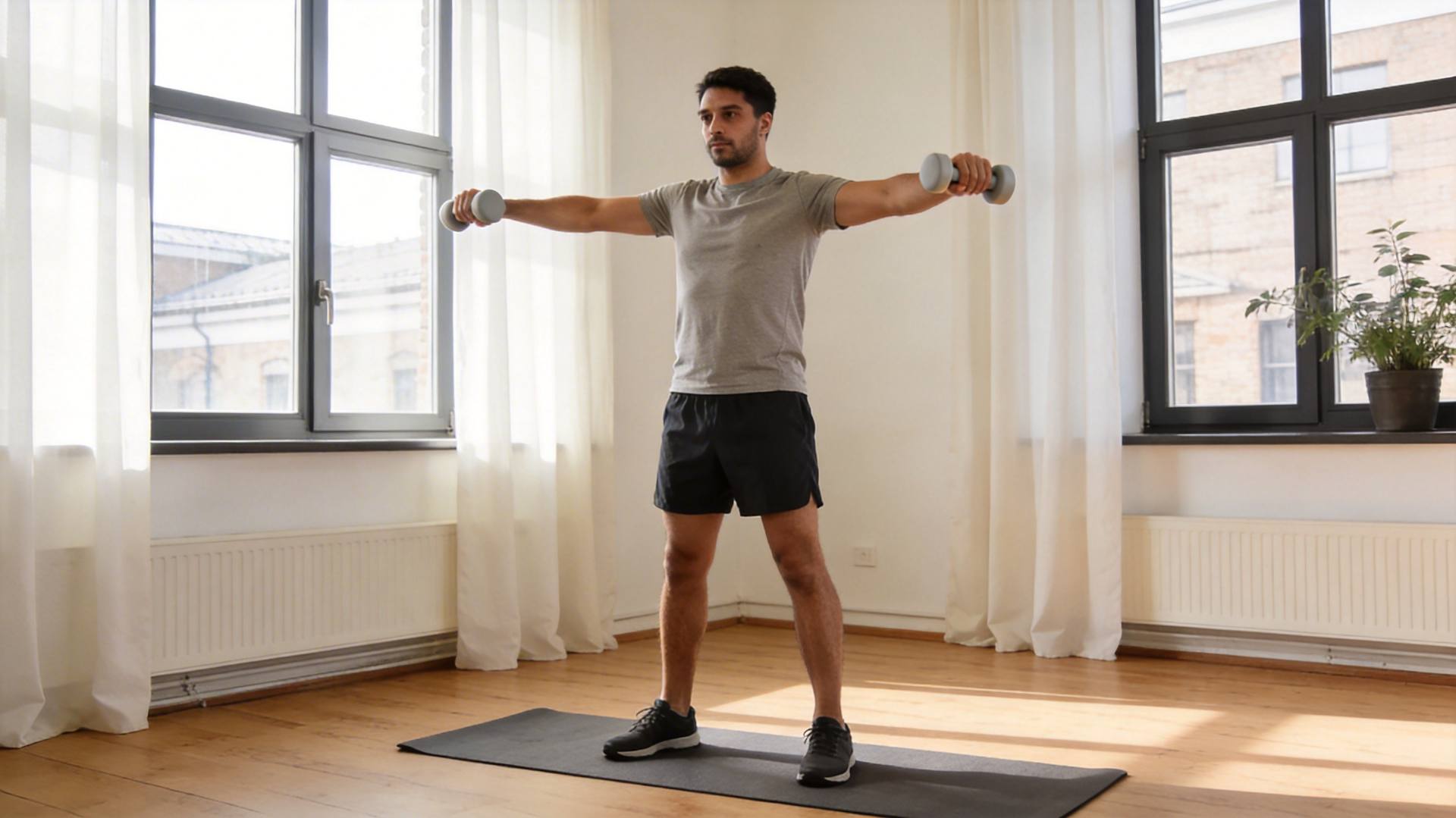
The 20-Minute Workout Framework I Use
I've designed three routines over the past two years, testing them with clients and refining based on feedback. Each one takes 20 minutes, requires zero special equipment, and is safe for people with Stage 1 hypertension — as long as you've cleared exercise with your doctor first.
Workout 1: Morning Walk & Gentle Floor Routine (20 Minutes)
This is the easiest entry point for beginners.
**Minutes 0–10: Brisk walking outside or on a treadmill** Keep the pace where you can still hold a conversation but are breathing noticeably harder than at rest. If you're huffing and puffing, slow down.
**Minutes 10–15: Seated shoulder rolls and neck tilts** Sit on the floor or a chair. Roll your shoulders forward 10 times, then backward 10 times. Then slowly tilt your head to each side, holding each position for 15 seconds. Feel that release — the tightness loosening up.
**Minutes 15–20: Wall push-ups and deep breathing** Stand arm's length from a wall. Place your hands on the wall and do 10 slow push-ups, keeping your core engaged. Then stand tall and do five rounds of box breathing — 4 counts in, 4 hold, 4 out, 4 hold.

Workout 2: Chair-Based Total Body Gentle Flow (20 Minutes)
This one is great for people who spend most of their day sitting. No getting down on the floor required.
**Minutes 0–5: Seated deep breathing warm-up** Sit at the edge of a chair, feet flat on the floor. Place one hand on your chest, one on your belly. Breathe in so your belly hand rises more than your chest hand. This is diaphragmatic breathing — it directly activates the parasympathetic nervous system.
**Minutes 5–10: Seated leg extensions and arm circles** Extend one leg out straight, hold for 5 seconds, lower. Alternate legs 10 times each. Then stand up and do slow, controlled arm circles — 10 forward, 10 backward.
**Minutes 10–15: Standing side bends and gentle squats** With feet hip-width apart, place one hand on a chair for balance. Slowly bend sideways, feeling the stretch along your ribcage. Do 10 each side. Then do 10 very slow, shallow squats — barely bending the knees. The key word is slow. No bouncing.
**Minutes 15–20: Final stretch and cool down** Sit back down. Stretch your arms overhead, interlacing your fingers and stretching to the ceiling. Then slowly drop your chin to your chest and relax. Finish with three deep breaths.
Workout 3: Short Swim or Water Walking (20 Minutes)
If you have access to a pool, this is my top recommendation. Water provides natural resistance without the joint impact of land exercise. It's incredibly gentle on the body while still providing cardiovascular benefit.
**Minutes 0–15: Slow water walking or gentle lap swimming** Keep the pace easy. If you're swimming laps, aim for a slow crawl or even just kicking with a kickboard. The resistance of the water makes even gentle movement effective.
**Minutes 15–20: Water stretches** Hang onto the pool edge and gently kick your legs. Do slow, controlled leg lifts in the water. The temperature of the water also has a natural calming effect — most people feel noticeably more relaxed after even 20 minutes in a pool.
What PlanForBP Brought to My Routine Design
I used PlanForBP's exercise science module to guide the structure of these workouts. Specifically, it helped me nail the right balance between cardiovascular activation and safety for hypertension. The guidance on heart rate zones was particularly useful — it confirmed that my instinct to keep things gentle was exactly right.
One thing I also appreciated: PlanForBP doesn't push extreme protocols. It meets you where you are. For a guy like me who spent years thinking "no pain, no gain," that was actually a meaningful shift in how I approach fitness for myself and my clients.
After the Workout — The Little Things That Matter
Once you're done, don't just collapse on the couch. Take two to three minutes to cool down properly. Standing, breathing deeply, letting your heart rate gradually come back down. That cool-down phase is when your body switches back from exercise mode to recovery mode, and that's when a lot of the BP-lowering benefit actually happens.
Drink some water. Stretch briefly. Maybe sit somewhere quiet for a minute and just breathe. Those little post-workout moments are when the nervous system recalibrates, and they add up over time.
If you're someone who's been avoiding exercise because you think you need to go all-out, I get it. But gentle works. It really does. And 20 minutes is enough to make a real difference over weeks and months.