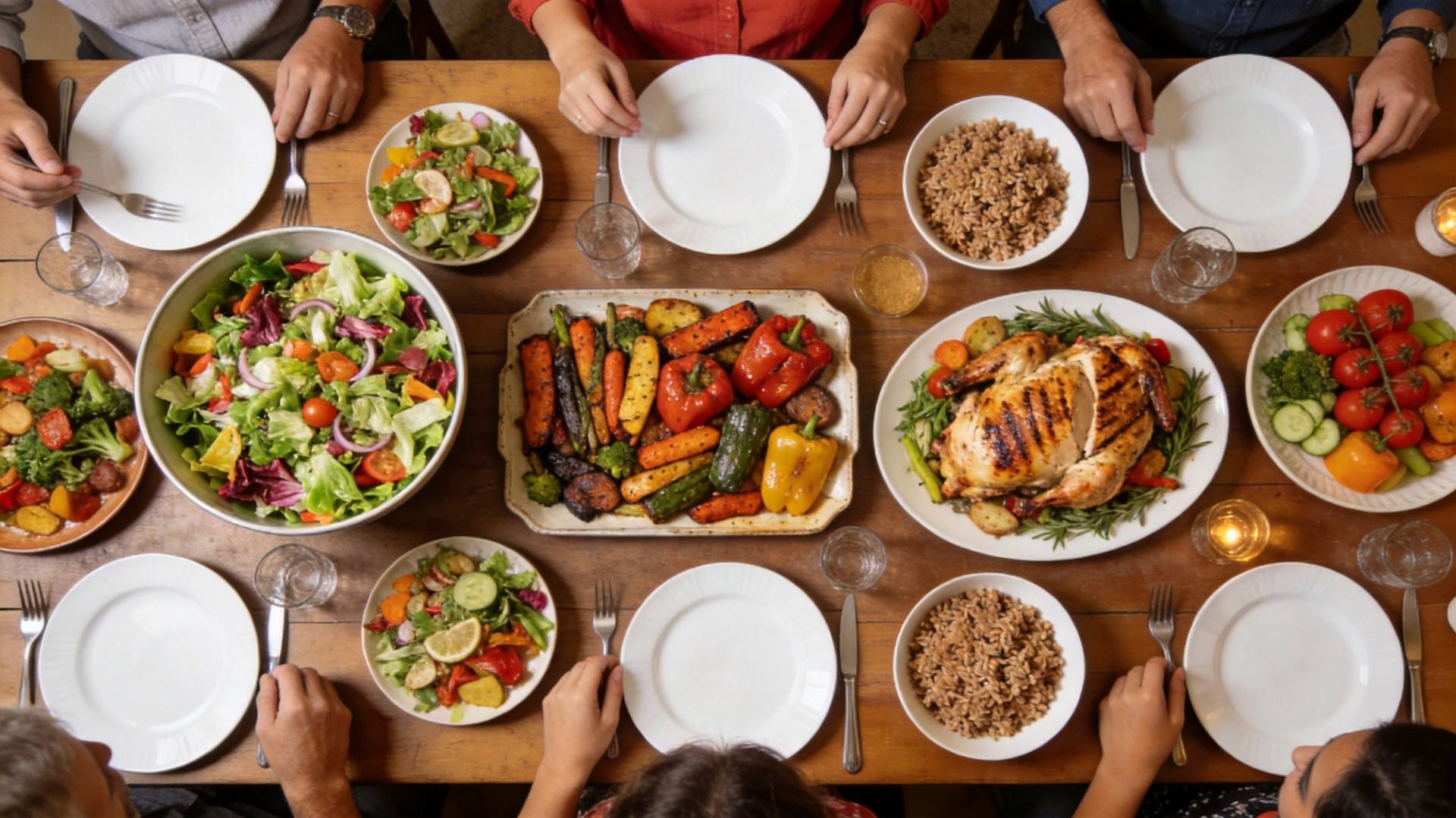
The murmur of family conversation fills the room — my brother's terrible joke, my mom's warm laugh, the gentle scrape of forks against ceramic plates. We're sitting around the dinner table, and what's on those plates is good. Really good. And it's also low in sodium, full of whole ingredients, and exactly what my mom's doctor ordered.
This scene took some work to get to. A few years ago, when my mom was first diagnosed with hypertension, dinner at our house was a battlefield. She was trying to eat differently, which meant she was eating separately from the rest of us, and that felt lonely for her and awkward for everyone else. The low-sodium version of whatever we were having always tasted like sadness on a plate.
We fixed it. And the fix wasn't about suffering through boring food. It was about actually learning to cook.
Why Family DASH Cooking Is Different From Solo Meal Prep
When one person in a household has dietary restrictions, the instinct is to cook two separate meals. Don't do that. Not only is it exhausting, but it also makes the person with the dietary needs feel like a burden. Instead, the goal is to cook one meal that happens to be DASH-aligned — and that tastes so good that nobody at the table even notices it's "health food."
The beautiful truth about DASH diet is that its core principles — more vegetables, more whole grains, more lean proteins, more herbs instead of salt — make food taste more vibrant, not less. When you learn to cook with garlic, lemon, fresh herbs, and good olive oil instead of reaching for the salt shaker, you unlock flavors that processed food has been hiding from you all along.
Three Recipes That Actually Work for a Real Family
Recipe 1: Honey Garlic Chicken Stir-Fry With Brown Rice
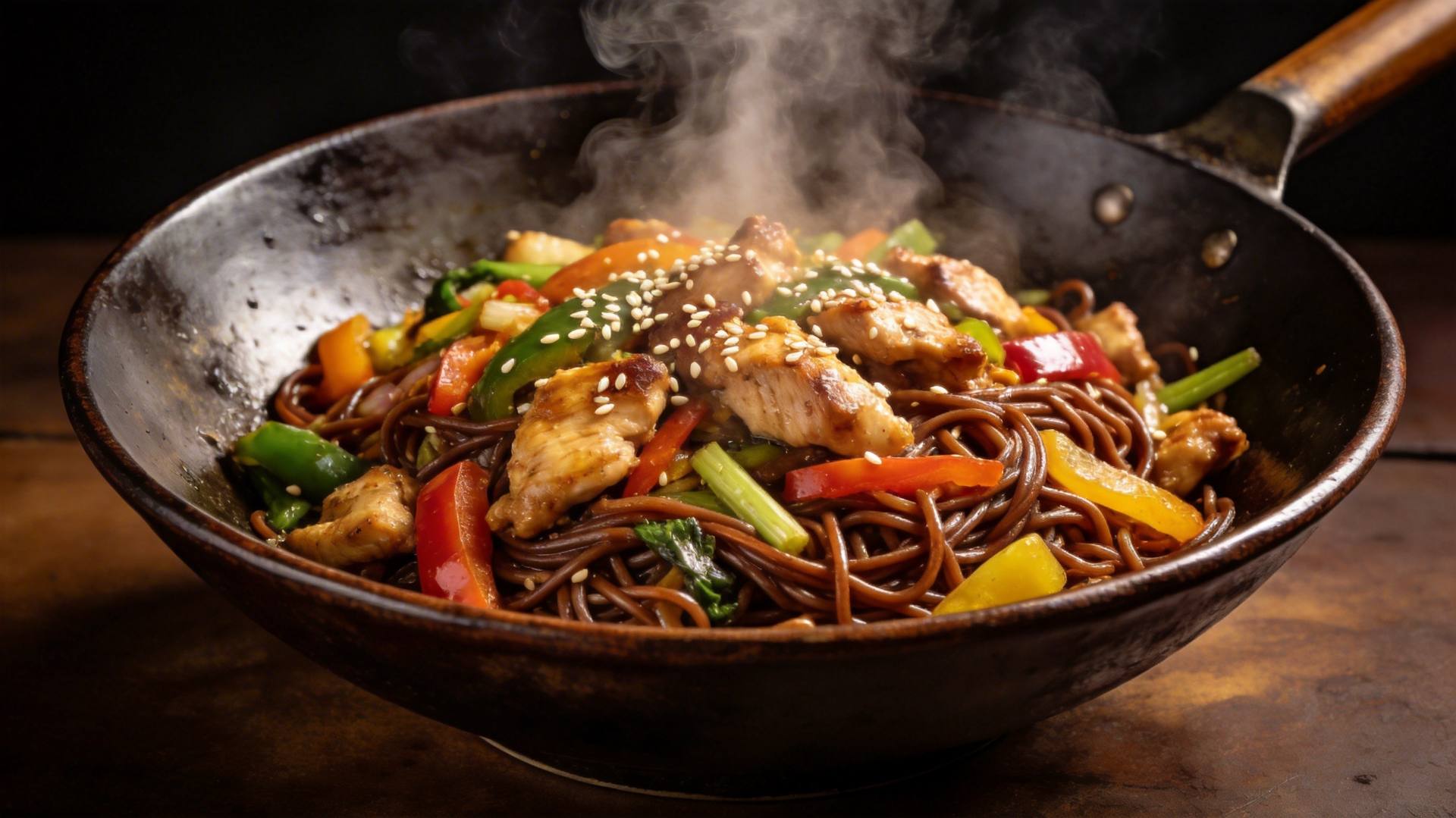
This is the dish that first made my brother say, "Wait, this is supposed to be healthy?" My mom requests it at least once a week.
**What you need for the family:** - One and a half pounds of boneless, skinless chicken breast, sliced thin - Two cups of broccoli florets - One red bell pepper, sliced - One cup of snap peas - Three cloves of garlic, minced - Two tablespoons of reduced-sodium soy sauce (or coconut aminos) - One tablespoon of honey - One tablespoon of olive oil - One teaspoon of sesame seeds (optional) - Three cups of cooked brown rice
**How we make it:** Heat the olive oil in a large wok or skillet over medium-high heat. Add the chicken and cook until golden on the outside, about 5 to 6 minutes. Remove and set aside.
Add the broccoli, bell pepper, and snap peas to the same pan. Stir-fry for 3 to 4 minutes until slightly tender but still bright. Add the garlic and cook for 30 seconds until fragrant.
Mix the soy sauce and honey in a small bowl, then pour it over the vegetables. Return the chicken to the pan, toss everything together, and cook for another 2 minutes until the sauce glazes everything nicely. Sprinkle sesame seeds on top.
Serve over brown rice. Sodium count per serving: approximately 340 mg. My brother's usual frozen pizza? About 900 mg per serving. That's a massive difference, and honestly, this tastes better.
Recipe 2: Turkey Bolognese Over Zucchini Noodles
This recipe solves the pasta problem. Regular pasta with meat sauce is often too high in sodium between the pasta, the sauce, and the meat. But zucchini noodles with a properly seasoned turkey bolognese? That's DASH-friendly and genuinely satisfying.
**What you need:** - One pound of ground turkey (93% lean) - One medium onion, finely diced - Four cloves of garlic, minced - One 14-ounce can of no-salt-added crushed tomatoes - One teaspoon of dried oregano - One teaspoon of dried basil - Half a teaspoon of red pepper flakes (optional) - Four medium zucchini, spiralized into noodles - Two tablespoons of olive oil - Fresh basil leaves for garnish - Black pepper to taste
**How we make it:** Brown the ground turkey in a large skillet, breaking it up as it cooks. Once browned, add the onion and garlic and cook until the onion is soft, about 4 minutes.
Add the crushed tomatoes, oregano, basil, and red pepper flakes. Reduce heat and simmer for 15 minutes while you spiralize the zucchini.
In a separate large skillet, heat the olive oil over medium heat. Add the zucchini noodles and cook for 2 to 3 minutes until just tender — don't overcook them or they get mushy. Season with black pepper.
Serve the bolognese over the zucchini noodles, garnished with fresh basil. The zucchini noodles keep the meal light and add extra vegetables, while the turkey bolognese satisfies that comfort food craving without the sodium hit.
Recipe 3: Slow-Cooker Black Bean Soup With All the Toppings
This one is a weekend project that makes enough for everyone to have leftovers for days. The slow cooker does most of the work, and the build-your-own-bowl format means everyone can customize their portion.
**What you need:** - Two 15-ounce cans of no-salt-added black beans, drained and rinsed - One 14-ounce can of no-salt-added diced tomatoes - One medium onion, diced - Three cloves of garlic, minced - One red bell pepper, diced - One tablespoon of cumin - One teaspoon of smoked paprika - Half a teaspoon of turmeric - Four cups of low-sodium vegetable broth - Juice of one lime
**How we make it:** Dump everything except the lime juice into the slow cooker. Cook on low for 7 to 8 hours or on high for 3 to 4 hours. Before serving, stir in the lime juice.
Set out toppings for everyone to build their own bowl: plain Greek yogurt (instead of sour cream), sliced avocado, fresh cilantro, diced tomatoes, a squeeze of lime, and whole grain croutons.
Per serving sodium: around 200 mg. Add your own toppings, and it's still under 400 mg total. Compare that to a can of condensed soup, which often exceeds 800 mg per serving.
How PlanForBP Helped Our Family
PlanForBP's family nutrition guidance made a real difference in how we approached this. Instead of just telling us "eat less sodium," it helped us understand the specific DASH nutrition targets for my mom's age and health profile — things like ensuring she was getting enough dietary fiber (aiming for 25 to 30 grams daily) and monitoring her overall sodium ceiling more carefully than a generic guideline would suggest.
The personalization was what made it work for our specific situation. My mom has hypertension, but my teenage brother also has different nutritional needs. PlanForBP helped us find the overlap — the meals that work for everyone at the table without anyone feeling like they're eating a "special diet."
One Small Change to Start This Week
Don't try to overhaul your family's cooking this weekend. Just pick one dinner. Make the stir-fry I shared above. Put it on the table, let everyone serve themselves, and watch what happens.
More often than not, nobody will even realize they're eating "DASH diet food." They'll just know they're eating something that tastes good. That's the whole trick. You don't have to suffer to eat well. You just have to learn to cook.