The water bottle is sweating on the shelf beside me. I've just finished a 20-minute workout — nothing intense, just some gentle stretching and light dumbbell work — and I'm already reaching for the snack I prepped earlier. In the old days, that snack would have been a bag of chips or some salted nuts grabbed from a jar. Today it's a small handful of unsalted almonds with a few dried apricots.
That swap — that tiny, barely-noticeable change — is part of a much bigger picture. And that picture is why I've become so convinced that DASH diet and gentle exercise work best together for blood pressure management.
Why Synergy Matters More Than Either Alone
Here's the thing I see a lot with the men I work with: they either focus entirely on diet or entirely on exercise, but not both. They'll hire a trainer and eat whatever. Or they'll follow a diet plan and skip the workouts because they think the food is doing the heavy lifting.
Neither approach is wrong, but both leave results on the table. When you combine DASH-aligned eating with consistent gentle movement, you get what's called synergy — the combined effect is greater than the sum of its parts.
Here's why. Exercise improves blood vessel elasticity and reduces arterial stiffness. DASH diet reduces sodium-driven fluid retention and improves the nutritional profile of your blood. Exercise reduces resting heart rate. DASH diet reduces inflammation in blood vessel walls. Together, they attack high blood pressure from multiple angles simultaneously.
Clinical data backs this up. Studies comparing diet-only, exercise-only, and combined diet-and-exercise interventions consistently show that the combined approach produces the largest reductions in both systolic and diastolic blood pressure.
The 20-Minute Workout and DASH Snacking Framework
This is the system I use with most of my male clients. It's built around three simple principles: gentle, consistent movement; strategic post-workout nutrition; and DASH-aligned snacking that supports recovery without undoing the work.
The Workout (20 Minutes, Any Day)
I always recommend my clients do this routine three to four times per week, ideally not on consecutive days.
**Minutes 0–5: Warm-up with dynamic movement** March in place, lifting your knees to hip height. Swing your arms naturally. The goal here is to gently increase your heart rate and warm up your joints. You shouldn't be out of breath. If you're gasping, slow down.
**Minutes 5–12: Light dumbbell circuit (or bodyweight equivalent)** Grab a pair of light dumbbells — 3 to 5 pounds for most people, 5 to 8 if you're already strong. Do 10 slow bicep curls, 10 shoulder presses, and 10 tricep extensions. Rest for 60 seconds. Repeat the circuit once more.

The key word is slow. Every movement should take about three seconds — two counts up, one count down. Controlled tempo builds strength without spiking blood pressure the way jerky, explosive movements can. And keeping the weights light means your blood vessels don't experience the extreme pressure fluctuations that come with heavy lifting.
**Minutes 12–18: Yoga-inspired stretching sequence** From standing, slowly fold forward, letting your arms hang toward the floor. Feel that gentle stretch along the back of your legs and spine. Roll up slowly. Then do a gentle lunge — step one foot forward, lower your back knee toward the floor (or as far as is comfortable), and hold for 20 seconds. Switch legs. Repeat once more.
This is where the workout delivers its stress-relief benefits. Stretching after movement — when your muscles are warm — has a profound calming effect on the nervous system. Many of my clients tell me this part of the routine is their favorite.
**Minutes 18–20: Cool-down breathing** Sit on the floor with your back against a wall, or lie flat. Place one hand on your chest, one on your belly. Breathe in through your nose for four counts, feeling your belly hand rise. Breathe out slowly through your mouth for six counts. Repeat five times.
The sound of your own breathing — steady, controlled, intentional — is one of the simplest and most effective stress management tools available. And doing it after exercise is when it hits hardest, because your body is already in recovery mode and especially receptive to parasympathetic signals.
Post-Workout DASH Snacking — Why Timing Matters
Here's where most men blow it. They finish a workout, feel hungry, and grab whatever is closest — usually something salty and processed. The sodium hits their bloodstream, and any blood pressure benefit from the workout gets partially negated.
The solution isn't willpower. It's preparation. I teach all my clients to prep their post-workout snacks the same way they prep their workouts.
After any workout, your body is in a recovery state. Your muscles need protein to repair. Your glycogen stores need replenishing. Your nervous system needs minerals — specifically potassium and magnesium — to recover from the physical stress.
A DASH-aligned post-workout snack addresses all three:
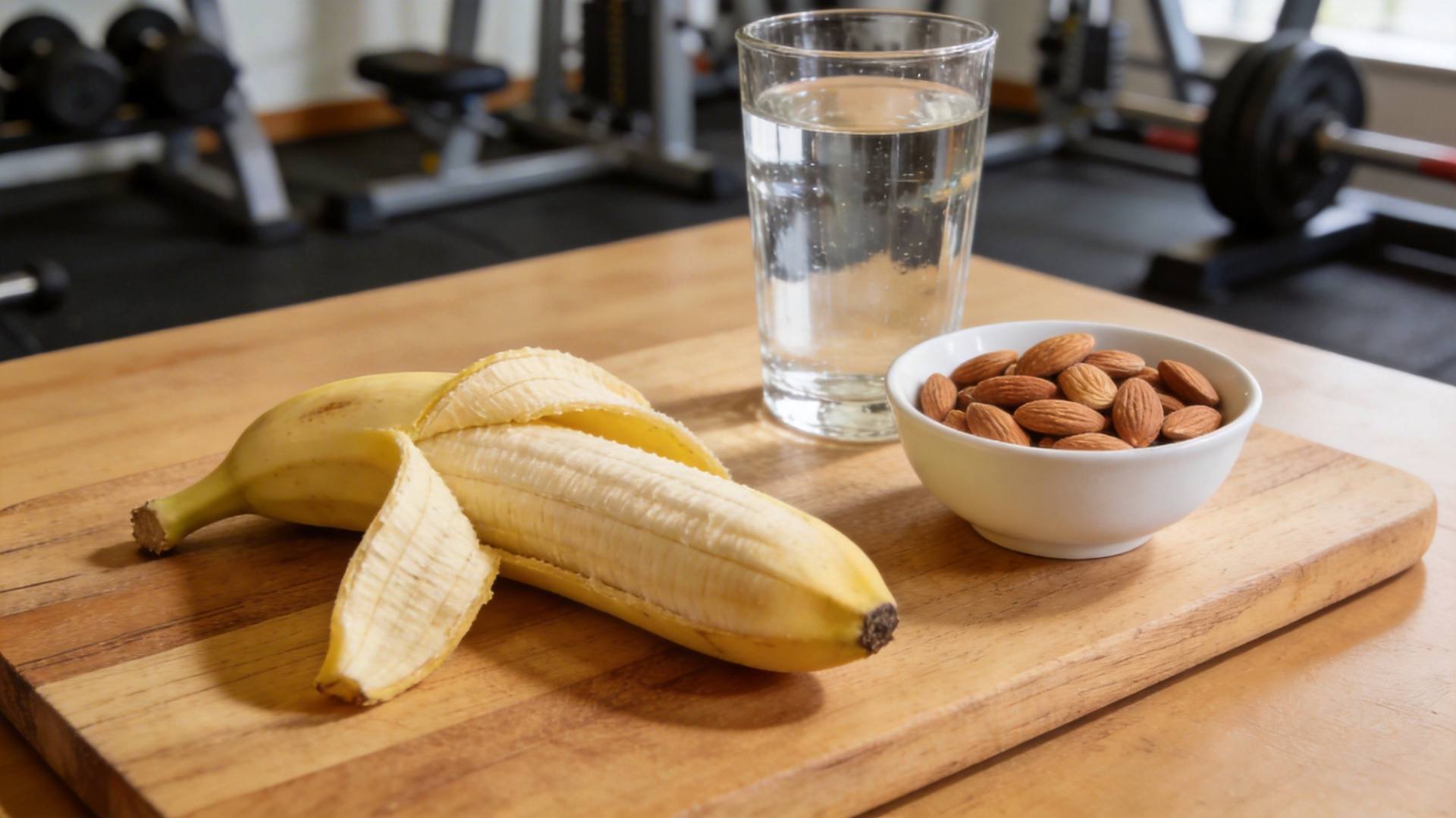
**Option 1: Banana with Unsalted Almonds** The banana provides potassium and quick carbohydrates. The almonds provide magnesium, protein, and healthy fat. Together, they support recovery without a sodium spike. Total sodium: under 20 mg.
**Option 2: Greek Yogurt with Honey and Berries** About a cup of plain Greek yogurt with a tablespoon of honey and half a cup of berries. High in protein, natural sweetness, and antioxidants. Sodium: under 150 mg.
**Option 3: Whole Grain Crackers with Turkey and Avocado** Two to three whole grain crackers (look for low-sodium varieties), two ounces of sliced turkey, and half an avocado. This combo delivers lean protein, fiber, and healthy fat. Sodium: around 300 mg — acceptable for a post-workout snack if your daily total stays within DASH limits.
How PlanForBP Makes This System Work
I'll be honest — before I started using PlanForBP's integrated guidance, I was giving my clients diet advice and exercise advice as two separate tracks. They were getting a workout plan from me and a nutrition plan from somewhere else, and the two weren't talking to each other.
PlanForBP's synergistic BP control module changed that. It helped me see exactly how post-workout nutrition timing interacts with DASH diet goals, how to calibrate exercise intensity to match dietary sodium intake, and how to structure the two so they reinforce each other instead of working at cross purposes.
For example, PlanForBP's guidance helped me understand that on workout days, slightly higher potassium intake (through food, not supplements) supports muscle recovery and helps counterbalance the temporary fluid shifts that come with exercise. On rest days, the focus shifts more toward maintaining steady sodium levels through consistent DASH eating. That kind of nuanced, integrated guidance is what makes a real difference.
A Simple Starting Point for Next Week
Here's what I'd say to any man reading this who's been trying to manage blood pressure through either diet or exercise alone: add the missing piece. If you've been exercising but ignoring food, prep one DASH-aligned snack and eat it after your next workout. If you've been eating well but not moving, commit to three 20-minute gentle workouts this week.
Small additions, consistently applied, are more powerful than dramatic changes that don't last. That's been my experience with myself and with every client I've worked with. PlanForBP helped me see that clearly, and I'm passing it on to you.
Now go drink some water. You've got a workout to do.